Lifting straps take part of a heavy pull off your fingers and put it on your wrists. For a loop strap, slip your hand through the cuff so the tail runs toward your thumb. Wrap the tail under the bar and back over once, then roll the bar toward you until the slack is gone. A single wrap loosens when you open your hand.
Use them when your grip gives out before the muscles you're training: heavy deadlifts, rack pulls, high-rep rows and shrugs. They don't brace the wrist joint or help a press, so for the bench use wrist wraps. Entering a powerlifting meet? Read the competition section first.
Put a loop strap on your wrist
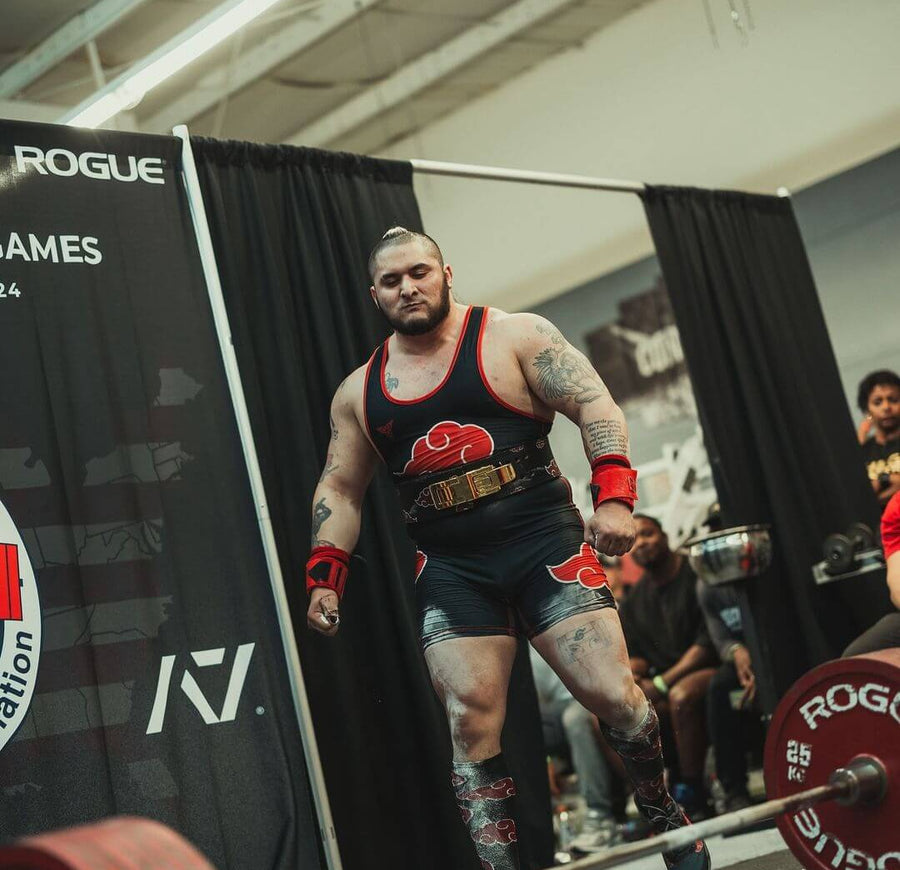
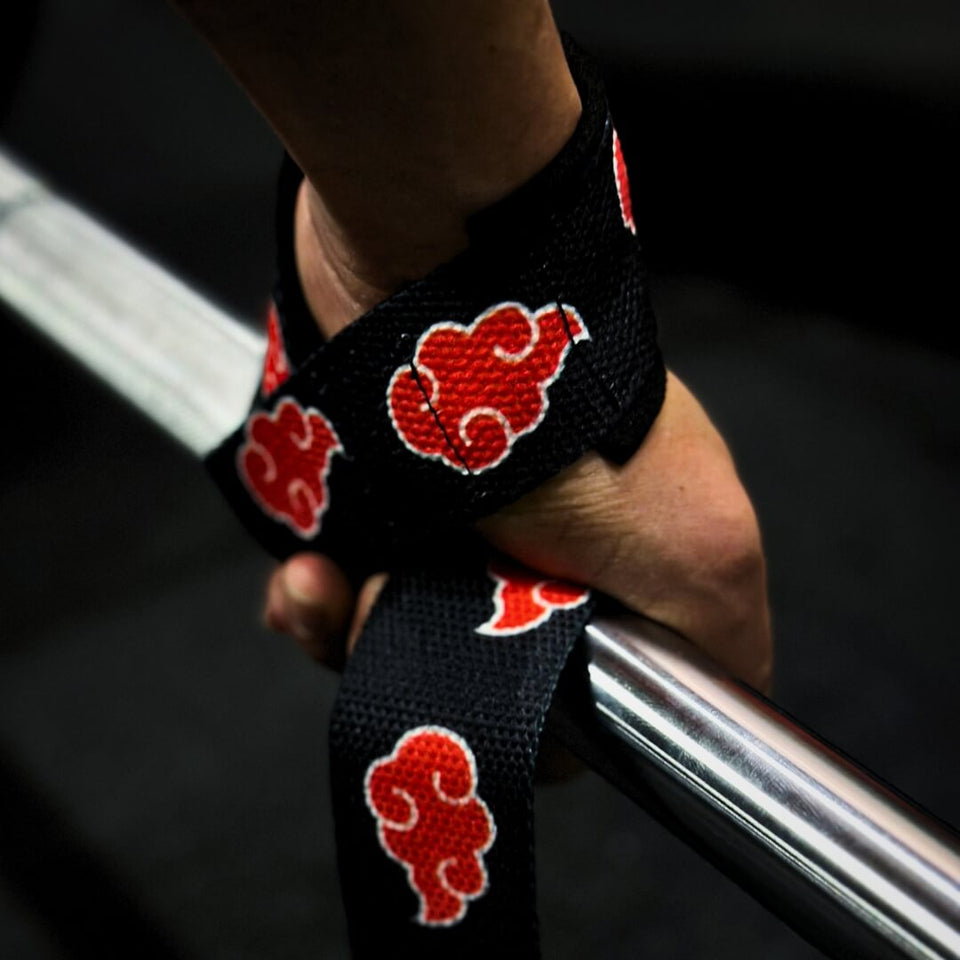
A loop strap, also called a lasso strap, is a length of webbing with a loop sewn at one end. The tail passes through it to make a wrist cuff. If your pair comes threaded as a left and a right, as our Cursed straps do, match each strap to its hand.
- Put your hand through the cuff. The tail should run across your palm and out between your thumb and index finger. If it heads the other way, you're holding the other hand's strap.
- Snug the cuff just below your hand. Keep it off the forearm, with room to slide a finger underneath.

Wrap the bar, tighten, then let go
- Put both cuffs on, then wrap your non-dominant hand first. Your dominant hand stays free to help with that first wrap. The second side is fiddlier, because that hand has to wrap its own strap while the other is already on the bar.
- Rest your open hand on the bar. The tail hangs down on your side of the bar.
- Wrap under, then over. Push the tail under the bar, away from you, then back over the top toward your palm. One wrap is the usual advice and the quickest to release. A few coaches teach two turns, which adds bulk and slows the release.
- Close your hand and roll the bar toward you. Roll until there's no gap between hand, strap and bar.
- Match the other side. Then grip hard, because on a deadlift a loose grip can let the bar drift forward off your legs.
- When the set is done, open your hand. A single wrap loosens as your grip opens, but a loop strap is still not a bail-out tool.
Check the tension and which way the tail wraps on a light first set. Rows use the same setup, with a barbell or a dumbbell.
Loop or figure-8 straps?
Can you always finish the set by setting the bar down? If so, a figure-8 (one band crossed into two loops) keeps you locked on for your heaviest pulls. A loop strap suits more lifts and releases faster. If you might have to drop the bar, skip straps for that lift.
| Compare | Loop strap | Figure-8 strap |
|---|---|---|
| Letting go | Opening your hand loosens it | Set the bar down first |
| Best for | Deadlifts, rack pulls, rows, shrugs | Heavy deadlifts, shrugs, holds |
| Our pair | Cursed lifting straps | 4-Star figure-8 straps |
Never strap a squat clean, and keep figure-8s off every Olympic lift. Think twice about straps for a front squat from the rack, where bailing is hard.
Figure-8s on barbell rows you lower to the floor are a judgement call: some lifters use them, but one strap maker advises against them on rows. For cable rows and pulldowns, use loop straps.
Figure-8 straps have no quick release
Once you're in a figure-8, you stay attached even if your fingers relax, which is the appeal on a heavy deadlift. The catch is getting out.
- Put your hand through one loop and up to your wrist.
- Pass the other loop under the bar.
- Put the same hand through the second loop. Both loops now sit on that wrist, with the bar inside the second one.
- Grip the bar and strap firmly, then lift.
- To get out, set the bar down first. Opening your hand won't free you.
Strap mistakes and fixes
- Leaving the cuff or wrap loose. It's one of the most common strap mistakes. Snug the cuff and roll out the slack before you pull.
- Wrapping against the roll. If the tail unwinds mid-pull, rewrap it so rolling the bar toward you tightens the strap.
- Balling up the spare strap. A wad in your palm may not release when you need it to, so let the spare length hang.
- Strapping every set. Warm up without straps and try a hook grip (thumb pinned under your fingers) first. A 2026 review found no scientific evidence yet on long-term effects, so it's unproven whether straps weaken or strengthen your grip. Separate grip work is still a sensible habit.
- Ignoring worn stitching. Check the webbing and seams before your heavy sets.
Can you use straps in competition?
Mostly no. As of October 2026, the IPF, USAPL, USPA and IPL rulebooks don't list lifting straps among the gear a lifter may use. Plan to pull without them at those meets. All four leave the deadlift grip to you, so a hook grip is one of your options.
Their current editions are the IPF Technical Rulebook 2026, USAPL Rulebook v2026.2, USPA Rulebook March 2025 and IPL Rulebook 2025. If you lift in another federation, read its rulebook before you enter.
USPA and IPL make an exception (rule 6.3.20). A lifter missing at least 50% of their fingers, including the thumb, may strap the gripping hand for the deadlift, attached at the wrist only. Tell the organisers beforehand.
Strongman rules vary from event to event, so read each contest's rules sheet. One 2025 contest allowed straps of all kinds on its car deadlift but listed none for its log and kettlebell clean and press.
Next step: compare loop and figure-8 pairs in our lifting straps collection.
Sources
- Lifting Straps 101: Types, Benefits & Proper Use, StrengthLog
- How to Use Lifting Straps for Deadlifts, Barbell Logic
- How to Use Lifting Straps: A Simple Tutorial, EliteFTS
- How to Use Lifting Straps for Your Strength Training, Tuff Wraps
- How To Use Lifting Straps, Gymreapers
- How to Use Lifting Straps, Art of Manliness
- Straps: What, How, Why, and When to Use Them, Jim Schmitz, IronMind
- Heavy Duty Figure 8 Lifting Straps, Rogue Fitness
- Figure 8 Padded Lifting Straps, Harbinger Fitness
- Are Lifting Straps a Game Changer for Resistance Training or an Overrated Tool? An Exploratory Review of Current Evidence and Future Research Directions, Martins et al., International Journal of Sports Physiology and Performance, 2026
- 2026 IPF Technical Rulebook (effective 1 March 2026, v3), International Powerlifting Federation
- USA Powerlifting Rulebook, Version 2026.2, USA Powerlifting
- USPA Technical Rules, 24 March 2025, United States Powerlifting Association
- IPL Technical Rules, 10 May 2025 (V2), International Powerlifting League
- Wrath of the Strongest 2025 entry form and rules, Strongman Corporation
Sources accessed 2 October 2026; Akinci records, links and rulebooks re-checked 6 October 2026.